Master’s degree in Biodiversity, Ecology and Evolution looking for a PhD position in marine biodiversity conservation.
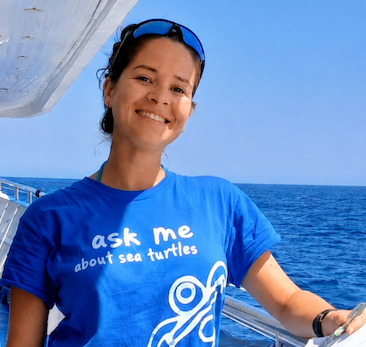
Melly Lauze holds a Bachelor’s degree in Biosciences and a Master’s degree in Biodiversity, Ecology and Evolution from Université Claude Bernard Lyon 1, during which she specialized in Anthropocene Ecology. She carried out her final-year internship at the Mediterranean Institute of Oceanography (MIO) and she’s now seeking a PhD position.
SWOT AdAC: What is your field of research and how did you choose it?
Melly Lauze: My academic background is quite interdisciplinary, at the intersection of ecology, biology and data analysis. I am particularly interested in using statistical models to better understand how ecosystems function and to address ecological and species conservation questions.
This is what led me to my six-month Master’s internship at the Mediterranean Institute of Oceanography (MIO), Marseille, France. There, I studied marine particles, a ubiquitous and highly diverse component of the ocean. They include a wide range of objects suspended in the water column, so they vary widely in size, shape, composition and origin. Marine particles play an important role in marine ecosystems and in the transfer of organic carbon from surface waters to the deep ocean, thereby contributing to the ocean’s role as a major carbon sink and its capacity to mitigate climate change. This diversity and the many processes that control their production, transformation and transport make them particularly complex to study. This is also what makes them such an interesting research topic, with many aspects that still remain to be understood.
The data I analysed were collected during the 2023 BioSWOT-Med campaign, before I joined MIO, using an Underwater Vision Profiler (UVP5) and gliders. Based on these observations, I investigated how abundance and size of particles varied with depth, in an environment shaped by fine-scale oceanic structures that typically span 1–100 km and evolve over days to weeks.
This internship allowed me to discover how statistical tools can help us better understand the marine particle compartment, which reflects the close coupling between physics, biology and biogeochemistry in the ocean.
SWOT AdAC: How is your research related to SWOT?
ML: My work is part of the BioSWOT-Med campaign, which took place in the Northwestern Mediterranean Sea in 2023 alongside observations from the SWOT satellite. One of the campaign’s objectives was to investigate how fine-scale oceanic structures, such as Northern Balearic Front and an anticyclonic eddy in this area, influence biological and biogeochemical processes in the water col-umn.
The campaign took place during a period of numerous SWOT overpasses over the study area, providing an exceptional opportunity to monitor these fine-scale structures on a daily basis. Because these structures are mobile and difficult to study in situ, sampling them requires adaptive strategies, including so-called Lagrangian approaches, which aim to follow their movement over time. This was the approach adopted during BioSWOT-Med. The sampling strategy was guided by a combination of SWOT observations, surface chlorophyll maps, ocean circulation models and insitu measurements, in order to position sampling stations as close as possible to the oceanic structures of interest. It was within this framework that the particle data I later analysed were collected.
SWOT AdAC: What do you find exciting about the SWOT-AdAC campaign to which you contributed?
ML: What I particularly enjoyed about BioSWOT-Med was seeing researchers with different areas of expertise come together around the same scientific question. Everyone contributed their own expertise, whether through satellite observations, physical and biological oceanography, or sta-tistical analysis, with the shared goal of building a more complete picture of how the ocean functions. It was particularly interesting to discover how a large oceanographic campaign works in practice and to see how different sources of data can be combined to study the same system. I am very grateful to have been part of such a project and to have met so many passionate researchers.
My contribution consisted of analysing particle size data to investigate their spatial organisation and temporal trajectories, with the aim of identifying their sources and following their fate within the water column, in the dynamic and contrasting environment of the Northwestern Mediterranean. In particular, I mainly used Gaussian Mixture Models to identify recurring patterns in particle size distributions and to explore their relationships with this specific hydrological context.
SWOT AdAC: What are your plans after you finish analysing SWOT data?
ML: Going forward, I would like to continue working in marine research, with a particular interest in the conservation of marine megafauna. In the longer term, I would like to pursue a PhD in this field, using my skills in ecology and data analysis to contribute to addressing concrete conservation challenges.
I also really enjoy being involved in non-profit organisations, whether through outreach activities or fieldwork. So I would therefore like to continue doing my part to bridge the gap between scientific research and species conservation.
SWOT AdAC: Besides SWOT, are you involved in another exciting research and do you want to share something about it?
ML: My internship at MIO encouraged me to continue exploring the connections between marine ecology, physical oceanography and data analysis. It also gave me the opportunity to discover other aspects of oceanographic research, for example by joining a research vessel during the MOOSE-ANTARES campaign. This allowed me to observe the UVP in operation and to better understand how the data I had been analysing were actually collected at sea. I am currently continuing to work on these results, with the aim of developing them into my first scientific publication.
Overall, I am particularly interested in understanding how human activities affect ecosystems and biodiversity, and how this knowledge can support conservation. In addition to formal training, I gained experience in marine ecology through summer schools and volunteering with organizations dedicated to ocean conservation (like “Wings of the Ocean” in France, and “Archelon” in Greece).
These experiences have strengthened my desire to continue in research. I now hope to pursue a PhD in marine biodiversity conservation, particularly focused on marine megafauna, while continuing to build on my skills in statistics and data analysis.