The SWOT-SWATI cruise ended on 10 November 2026 after ten days at sea off Recife and Natal. Two current-meter moorings, six Argo floats and eight MELODI buoys were deployed, and Brazilian and French students were then trained on the instruments.
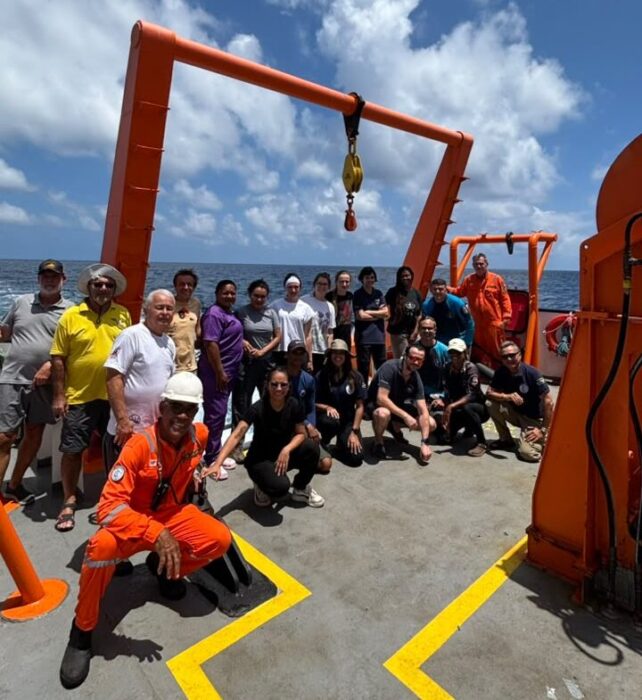
The SWOT-SWATI cruise took place from 1 to 10 November 2026 aboard the research vessel Ciências do Mar IV of the Federal University of Pernambuco (UFPE), departing from the port of Recife. The cruise brought together researchers from Brazil and France to study the circulation of the southwestern tropical Atlantic, in particular the North Brazil Undercurrent, a deep current that leaves almost no signature at the surface.
The main goal of the cruise was to install two moorings, off Recife and north of Natal. Each mooring is equipped with an acoustic current meter, which measures current velocity over the full water column, along with temperature and pressure sensors. These instruments will remain in the water for one year. Both lie beneath the tracks of the SWOT satellite, which makes the sites ideal for validating the satellite’s fine-scale observations against in situ measurements.
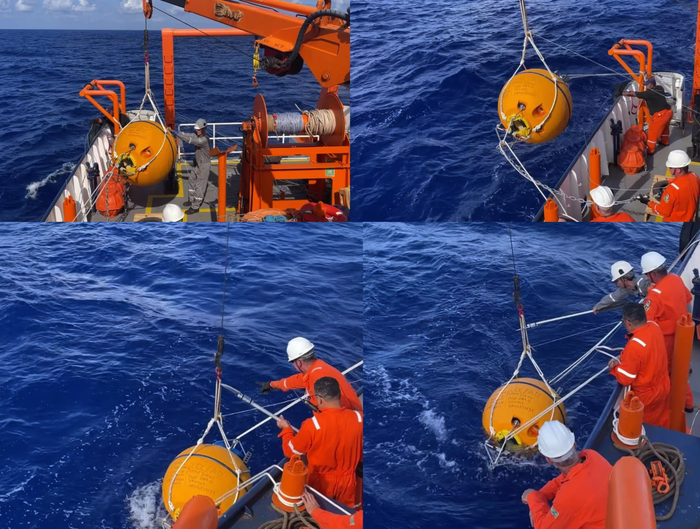
Deployment of an mooring from the back of R/V Ciências do Mar IV.
Six Argo floats were deployed, three at each of two locations. They measure the temperature and salinity of the water column. They will drift with the currents at 2,000 m, with a profile every 3 days, for as long as they remain in the region. Afterward, they will drift at 1,000 m, with a profile every 10 days. They will be active for at least five years, and their data will be available in the Argo database.
Eight MELODI surface buoys were also deployed, two at each of four locations. They measure significant wave height, wave frequency, surface wind and sea surface temperature. They drift with the currents until they reach the coast.
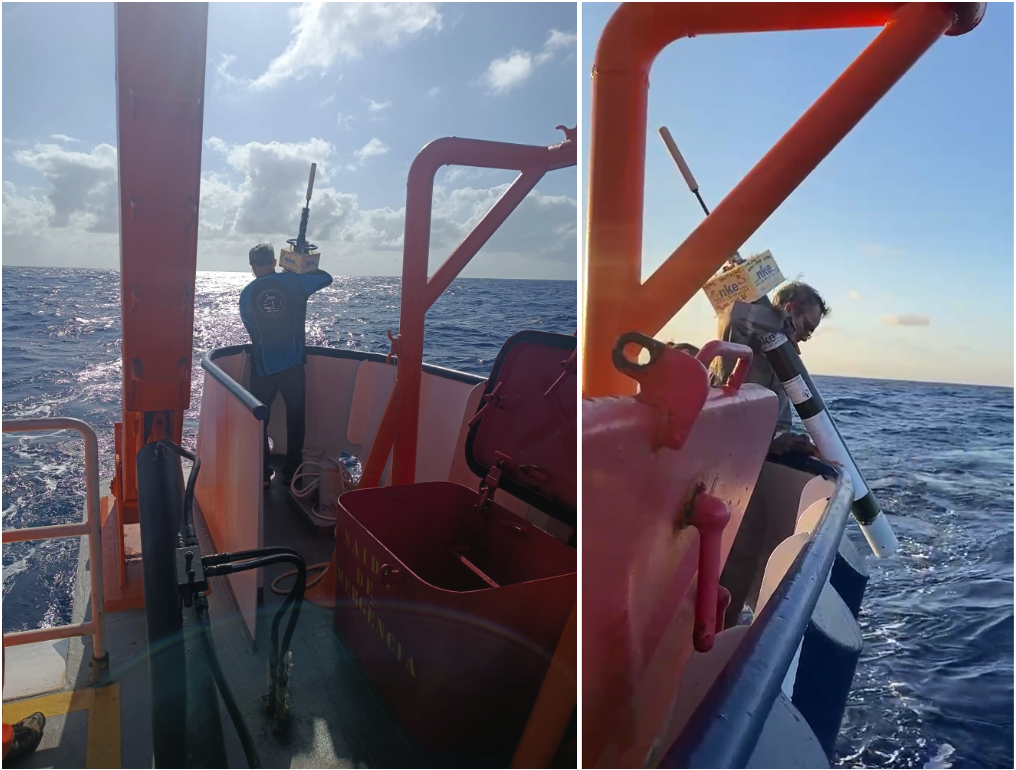
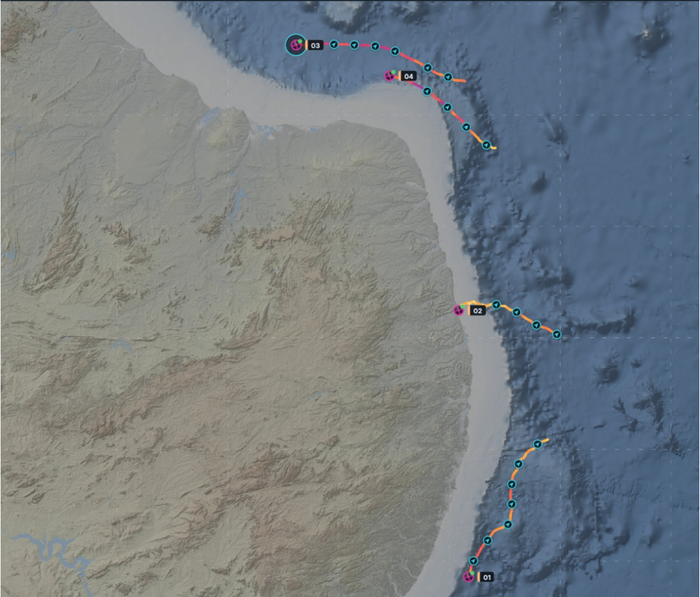
Deployment of an ARGO float from R/V Ciências do Mar IV (left and center) and trajectories of MELODI buoys during the first days (right).
Water and current measurements were also made from the ship. In addition, a shipboard altimeter, CYCLOPEE, measured sea surface height along the ship’s route.
Training was also a key part of the project. On 11 and 12 November 2026, after the cruise, Brazilian and French students attended theoretical and practical sessions on oceanographic observation instruments and techniques, including Argo floats, moorings and satellite altimetry. The sessions were led by the experts who took part in the cruise.
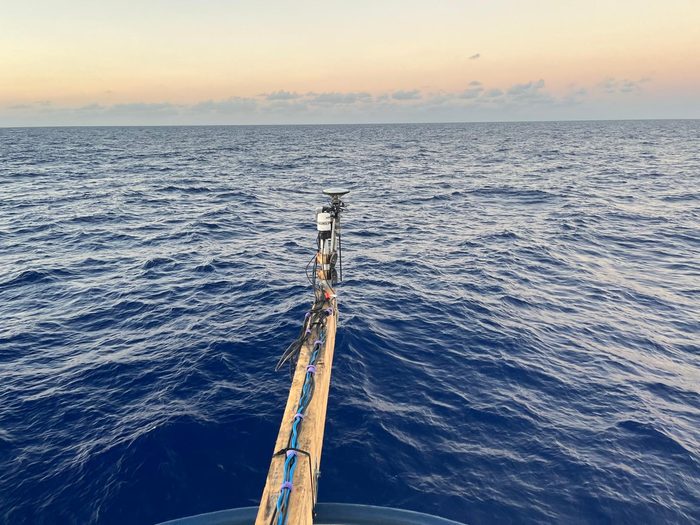
The CYCLOPEE altimeter mounted on R/V Ciências do Mar IV.