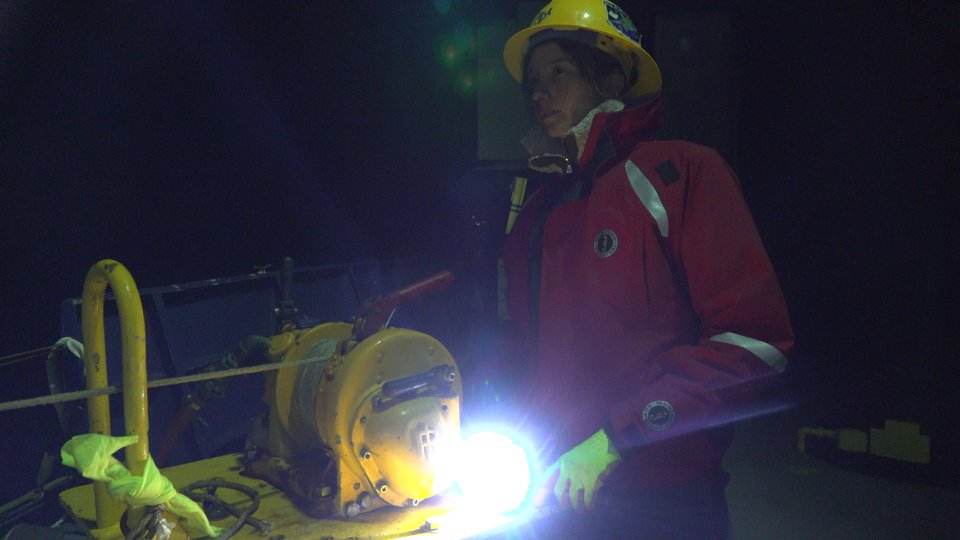
INTERVIEW – During BioSWOT-Med Alice della Penna is in charge of study zooplankton grazing. She explains what it is, why it is important to measure it and she describe a new “exclusion experiment” to study it during the campaign.
Alice della Penna. Credits: Nicole Estaphan.
THE INSTRUMENTS OF OCEANOGRAPHERS – Alice della Penna is a biological oceanographer currently working as Lecturer at the Waipapa Taumata Rau University of Auckland, in New Zealand. Her research interests focus on how oceanic currents affect marine life from microbes to large animals such as sharks, seabirds, and marine mammals. During the BioSWOT-Med campaign she will be in charge to study zooplankton grazing.
First off all, what is zooplankton grazing?
Zooplankton grazing is the process by which zooplankton (an extremely diverse group of floating animals that can be microscopic or as large as jellyfish) feed on phytoplankton (floating microalgae). One of the aspects I’ve been growing more and more interested in is not just how currents affect the distribution of marine organisms themselves, but how features such as eddies, meanders, and fronts can impact the relationships between organisms (for example grazing and predation).
Why is it important to measure it?
Phytoplankton play a key role in marine ecosystems and in biogeochemical cycles. However, their role is heavily modulated by their fate. For example, if phytoplankton is grazed by zooplankton that migrate in the water column, the carbon that constitutes that phytoplankton will be transported away from the ocean surface, and it will be ‘exported’ to the deep ocean. This is an important component of the carbon cycle, but it is very hard to quantify, and it is especially difficult to assess how it varies in space and time. Furthermore, it is a mechanism that as far as I know is not well represented in climate models.
During the BioSWOT-Med campaign you will be carrying out an “exclusion experiment” to measure zooplankton grazing. Can you explain what is it and how it works?
There are multiple methods to measure zooplankton grazing which are focused on different types of zooplankton of different sizes. My goal for the BioSWOT-Med campaign is to try a new method to estimate the grazing of vertically migrating zooplankton on phytoplankton living in the epipelagic (the upper layer of the ocean that receives sunlight during the day).
The key idea is to have two mesocosms (two very large aquaria onboard of the R/V L’Atalante) and monitor how the planktonic community they contain changes in time during the night. The ‘day mesocosm’ will contain the phytoplankton and zooplankton that lives all the time in the epipelagic ocean, the other one, the ‘night mesocosm’ will contain organisms that live in the epipelagic during the day and the zooplankton that migrates to the epipelagic as the sun sets from the deep ocean. Therefore, the migrating animals whose grazing we want to estimate are excluded from the ‘day mesocosm’ but not from the ‘night mesocosm’. We will then monitor these two mesocosm during the night and study the differences we obtain between the two. Because we expect everything else to be the same for the two mesocosms (e.g., the physiological cycles of phytoplankton, the digestion of zooplankton, which is impacted by sunlight, etc.) we anticipate that the differences between the phytoplankton abundance and size in the two mesocosms will be the result of the grazing from the migrating zooplankton.
INTERVIEW – Anne Petrenko is in charge of analysis of hull mounted ADCP and of deployment of L-ADCP and FF-ADCP in the BioSWOT-Med campaign. Here, she describes how these instruments work and what are the differences among them.
Anne Petrenko.
THE INSTRUMENTS OF OCEANOGRAPHERS – Anne Petrenko is a Professor at Aix-Marseille University, in the Mediterranean Institute of Oceanography. She’s a physical oceanographer with interdisciplinary competences and interests.
What are your research interests besides BioSWOT-Med?
Science-wise, for a while I have concentrated my research on coastal circulation, coast-offshore gradients, using multidisciplinary approaches : in situ data, modeling outputs, satellite. Apart from currents, the data include classical temperature, salinity, depth but also all kind of optical data providing information on phytoplankton and particles present in the water column. I generally measure currents with ADCPs as described below.
Lately, with our PhD student Caroline Comby, and colleagues Stephanie Barrillon and Jean-Luc Fuda and others, we have focused on the challenge to estimate vertical velocities. We re doing it either theoretically (with equations) or by measurements. In the latter case, we have two types of approaches: either using a flight model as in the case of VVP, or with 5-beam ADCPs (ADCPs with a special vertical beam). We have been doing these measurements in low energy regions (with relatively small vertical velocities) to challenge our results and are also aiming at measuring these velocities in areas with stronger ascending or descending velocities. The aim afterwards is to connect the results with biology, and in the future HOPE-VV program (starting at the end of 2023) to connect it with carbon export due to trichodesmium in the South Pacific.
Aside from science, I love swimming, walking/hiking, singing, reading, doing yoga and teaching hatha yoga. Teaching yoga is completely different from teaching science but, in both cases, it is great to either sow seeds or, even better, see “plants” growing. I really enjoy teaching, love to see people/student understand new concepts. Maybe it is linked to the fact that I bloom on learning new things myself. I am very curious, enthousiastic at discovering new ways of thinking. I suppose that’s why I am a scientist. I am never bored in our job.
In the BioSWOT-Med campaign, among other things, you will be in charge of analysis of hull mounted ADCP and of deployment of L-ADCP and FF-ADCP. What are they and how do they work?
An acoustic Doppler current profiler (ADCP) is an instrument used to measure water current velocities over a depth range using the Doppler effect of sound waves, scattered back from particles within the water column. If a sound is emitted and there is a receiver, the Doppler effect consists in having the sound pitch getting higher (lower) when the distance transmitter/receiver shortens (lengthens). The quicker the distance changes, the quicker the sound pitch changes. Reversely, if we measure the pitch drift from its initial value, we can evaluate the relative displacement between the transmitter and the receiver. That is what we are using with ADCPs with the hypothesis that the particles -on which the sound backscatters- are drifting passively with the ocean currents. Hence the velocities, measured by the frequency shift of the backscattered sound waves, are taken to be oceanic velocities.
These ADCP can be put at a fixed point (for example on a mooring or oceanic fixed structure), in the hull of a vessel (hereafter called VM-ADCP as vessel-mounted ADCP), attached to a CTD rosette (called L-ADCP for lowered ADCP) or to a free-falling cage (hence called FF-ADCP).
Jean-Luc Fuda, Caroline Comby, Anne Petrenko (from left to right).
INTERVIEW – In the BioSWOT-Med cruise Massimo Pacciaroni will be in charge of drifters and floats deployment. He describes what the differences are between the two and what physical processes they can study.
Massimo Pacciaroni.
THE INSTRUMENTS OF OCEANOGRAPHERS – Massimo Pacciaroni works at the National Institute of Oceanography and Applied Geophysics (OGS). In the BioSWOT-Med cruise he is part of WP Physical processes, and in particular in charge of drifters and floats deployment.
What are your research interests besides BioSWOT-Med?
My research interests focus on water properties measurements using floats and drifters, with a particular interest on floats programming and their data analysis.
In the BioSWOT-Med campaign you will be in charge of drifters and floats deployment. What is the difference between floats and the drifters? How do they work and what sensor do they carry?
By using floats we measure water column temperature, salinity and dissolved oxygen starting from 2000 m depth going up to the surface.
An inflatable external bladder allows the float to ascend and descend. When at surface the Iridium transmission starts in order to transmit all the data.
Floats are equipped with a CTD, and depending on the model they carry an oxygen probe, radiometer, fluorometer, spectrophotometer (nitrates in our case).
With the drifters we observe the water velocity near the surface and, depending on the drifter type (the design can vary), a few more parameters are registered.
What physical processes can they study?
Seawater velocity and mixing, heat content and exchange, fronts, tides. In general, there are a great number of processes that can be observed with floats and drifters.
Arvor and Provor floats. CODE drifters.
<span>BioSWOT- Med</span>
INTERVIEW –Maristella Berta is in charge of lagrangian instrument coordination in the BioSWOT-Med campaign. She describes what drifters and floats are, what information can be gathered from them and how real-time data can help inform the adaptative sampling strategy of BioSWOT-Med.
Maristella Berta and a float.
THE RESEARCH THEMES – Maristella Berta is a researcher in physical oceanography at the Institute of Marine Science – National Research Council (CNR-ISMAR) in Lerici, La Spezia, Italy. In the BioSWOT-Med campaign she is charge of of lagrangian instruments coordination. She describes what drifters and floats are and what information can be gathered from them.
What are your research interests besides BioSWOT-Med?
I am a physical oceanographer and I focus on the dynamics of sea currents by analysing observations from field samplings (buoys and sensors at sea), remote platforms (such as satellites and radars) and ocean model outputs. I’m interested in the combination of independent and complementary observation platforms, that is essential to get the overall picture of the ocean processes playing at different scales at the same time. Multidisciplinarity is also a key aspect of the multiplatform approach, since it allow us to investigate the interaction between the physical and biogeochemical component of the ocean. Among the physical processes characterizing the upper layer of the ocean I investigate how marine currents drive the dispersion of tracers and passive particles (such as pollutants like oil or plastic, and biological tracers as microalgae or fish larvae), and the transport of these particles in the vertical (from surface to depth, and viceversa). Understanding these processes can provide guidance for practical applications such as marine accident response or management of marine protected areas.
In the BioSWOT-Med campaign you are in charge of lagrangian instruments coordination. What does lagrangian mean?
Lagrangian instruments are devices that measure sea water properties as they drift with sea currents, this cathegory of instruments differs from the Eulerian ones which observe sea water properties from a fixed-point, such as a device moored to the sea floor. Lagrangian devices need to be equipped with a GPS (Global Position System) tracker and satellite communication in order to retrieve measurements and correspondent location at regular times.
Drifters are Lagrangian buoys usually equipped with drogues, that make them “sail” at a specific depth: CODE and CARTHE drifters follow surface currents within the first meter, while SVP design includes a drogue centered at 15m depth to be representative of the dynamics of that water layer. Other drifters, such as the spotters, are designed to float at the air-sea interface and do not have any drogue.
Floats instruments, on the other hand, are pseudo-Lagrangian in the sense that they are not totally passive to sea currents since they drift at a specific depth and periodically perform vertical cycles measuring water properties from depth to the surface, where they also transmit position and data just recorded. In BioSWOT-Med we will have 30 CARTHE plus CODE drifters, 20 SVPs, 2 spotters, and 6 floats.
What type of sensors are present on the drifters and floats andhow do you use the information gathered from these instruments?
Aside from the basic drifter setup (simply the GPS tracker, as for CODE and CARTHE), the other drifter types involved in the experiment are equipped with additional sensors to measure essential ocean variables such as sea water temperature (for the SVPs), waves (for spotters) or biogeochemical properties of the water (in the SVP-BGC prototype). All (six) floats have pressure, temperature and conductivity (for salinity) sensors, four of them have an additional oxygen sensor, while the other two have biogeochemical sensors as well.
In Lagrangian datasets we look at individual drifter trajectories, but more importantly to the relative displacement among drifters within a cluster. This analysis can indicate converging or diverging water masses in the upper sea layer, where intense vertical currents tend to develop and, in turn, enhance the water properties exchange from surface to depth. Combining drifter trajectories with water column sampling from floats can contribute to characterize sea properties in correspondence of intense water mixing spots, that can be associated to high biological productivity.
While on board, you will analyze in real time the data collected by the langrangian instrument. How can this help the sampling strategy of the campaign?
During BioSWOT-Med we will target specific small scale (order of 10km) circulation features, such as vortices or fronts (the interface between two different water masses) identified within the SWOT satellite swaths. The satellite observations will guide the choice of the field of activity that we will start exploring with some water samplings and drifters deployment. Through a first real-time processing, the Lagrangian component (drifters) will contribute to assess and sharpen the target identified by SWOT images and it will provide guidance for the deployment of other instruments at sea able to resolve finer scale processes. In a second phase, the analysis of drifter data can be used to quantify surface divergence and convergence and to provide an estimate for vertical currents magnitude in the targeted feature. The analysis of floats together with the other high resolution observations will contribute to characterize the variability of the biophysical properties in the targeted feature.
Maristella Berta deploying a CARTHE drifter. CARTHE drifters.
INTERVIEW – In the BioSWOT-Med campaign, Sven Gastauer is in charge of Zooglider, a specialized glider to study mesozooplankton. He describes its functioning, the different instruments mounted on it, and the large range of data that can be gathered.
Zooglider with Jeff Sherman, Mark Ohman, Sven Gastauer (left to right) at the Scripps Institution of Oceanography.
THE INSTRUMENTS OF OCEANOGRAPHERS – Sven Gastauer is a senior acoustic scientist at the Thünen Institute for Sea Fisheries, Germany, and holds a visiting scholar position at the Scripps Institution of Oceanography (University of California San Diego), USA. In the BioSWOT-Med campaign he is charge of Zooglider, a specialised glider, to study mesozooplankton.
What are your research interests besides BioSWOT-Med? My main research interests are in the field of hydroacoustics, as a tool to better understand ecological and biological processes. This often requires coupling of hydroacoustics with auxiliary data sources, such as biological samples, optics and physical measurements. This requires me to constantly further my understanding of acoustic signals, which resulted in a strong interest in acoustic scattering models.
What is the zooplankton glider? Zooglider is a specialised glider, aiming at furthering our understanding of mesozooplankton. Many zooplankton species are fragile or gelatinous animals, difficult to sample or observe with traditional methods, such as nets. Zooglider is designed to be as stealthy as possible under water, causing as little turbulence as possible in order to not disturb the marine organisms in their natural behaviour.
Zooglider is typically deployed by two or three people. Once released in the water it is autonomous. Zooglider does not have an engine or external moving parts. As a glider, it is equipped with a small oil bladder. An integrated pump will pump oil from or into this bladder, causing a small change in total density of the glider, resulting in a downwards or upwards force. The presence of wings creates lift, allowing the glider to swim upwards or downwards in the water column at an angle, and thus moving over the seafloor. A typical dive would be down to 400 m of depth and last approximately 3 hours. When Zooglider reaches the surface, it raises one of its wings into the air to establish a satellite link to shore. This is how it communicates us that everything is ok and it sends us a summary of what is has observed on its last dive.
How do you operate Zooglider? Based on the latest position from Zooglider, we combine information from satellites about features we might want to sample with the later report we receive from Zooglider, to decide if we want it to continue its preprogramed path, or if we want to give it a new destination. This routing process is revised constantly during a mission. In the case of BioSWOT-Med, I will closely monitor the received information and negotiate the next waypoint with Prof. Mark Ohman from the Scripps Institution of Oceanography. Once we agree on our next destination, Dr. Jeff Sherman from the Scripps Institute Development Group will send the commands to Zooglider through a satellite link.
Zooglider under water.
What data do you acquire with Zooglider? During the descent, Zooglider is in a passive mode and only records ambient sounds of the sea with a hydrophone. During the ascent, Zooglider collects CTD information – Temperature, Salinity and chlorophyll fluorescence (as a proxy for phytoplankton concentration), allowing us to gain detailed insights about the physical environment in which Zooglider is operating.
But the ocean is not only physics and we also want to understand the drifting planktonic organisms near the base of the ocean food web. Therefore, we have equipped Zooglider with a specialised optical system we call the Zoocam. Zoocam is a shadowgraph imaging system, which as the name suggests, records the shadows of anything Zooglider crosses on its journeys. A red LED beam (bundled and parallelised to remove any spatial distortion) is projected across a sampling tunnel of about 250 mL, attached to the font of the glider. Anything that passes through this light beam will cast a shadow that is then recorded by the camera. This allows us to quantitatively record dense organisms, like small crustaceans, as well as translucent gelatinous organisms, like medusae, siphonophores or marine snow. With ambient light being so sparse at depths greater than a few meters, many organisms don’t rely on their optical senses alone but use sound as a way of communicating and sensing the environment.
Zooglider is also equipped it with a dual frequency active acoustic system we call Zonar. Zonar sends out acoustic waves at 200 and 1000 kHz and then waits for the signal to come back. A soundwave travels much faster underwater than in the air. On its path through the water column, any object or organism it encounters will send back a part of the acoustic energy to its source. In very general terms, the signal received at higher frequencies will be more dominated by smaller organisms and the signal at lower frequencies will be more dominated by larger organisms. This is a technique very similar to what dolphins use to find prey, friends and how they avoid potential obstacles. The latter inspired us to also build a seafloor detection algorithm into Zooglider, which allows it to sense the presence of the seafloor and automatically adjust its trajectory, should it get too close. Through a combination of acoustic scattering models, information received from zonar and the zoocam, we can separate the acoustic signal into organisms of different size classes or taxonomic groups. Coupled with observations of the physical environment and the zoocam images, this allows us to detect changes in density or composition of the mesozooplankton communities.
How do you use the hydrophone on a Zooglider to listen to marine mammal and fish calls? Many marine organisms are very vocal; they communicate using sound. A hydrophone is an underwater microphone, which allows us to listen in into the chitchat of sound producing animals, such as marine mammals or fish. It is a well-known that whales have different songs or types of calls they use to communicate. We can for example distinguish different baleen whale species by the calls they produce and often we can even understand if they are performing social, feeding or mating calls. Not so well known is the fact that many fish are also rather vocal. Admittedly, the sound of a fish chorus is not quite as melodic or relaxing as the sound of a humpback whale might be, and more accurately described as grunting. Nonetheless these sounds can provide us with insights on the behaviour of fish. While marine mammals produce sounds using mechanisms similar to ours, fish mainly produce sounds through sonic muscles on or near their swimbladder, by rubbing together skeletal components or in a more passive fashion, through abrupt changes in swimming directivity or speed. On Zooglider we recently added an Acousonde, a kind of highly portable hydrophone. We have preprogramed the hydrophone such that is starts recording when the glider reaches a certain depth and stops when Zooglider begins the ascent. We use the descent for our listening session, because this is the time Zooglider is the quietest, with no other instrument noise. After the voyage we can then listen into all the conversations that Zooglider recorded on its mission.
INTERVIEW – In the BioSWOT-Med campaign, Magali Lescot is in charge of the WP5 on Genomics. She will collect samples to study the microbial community (viruses, bacteria, protists) to evaluate the patchiness of these plankton functional types and taxa and monitor the short term biogeochemical functional responses of the microbiome to the highly dynamic physical environment.
Magali Lescot aboard the R/V L’Atalante during the BioSWOT-Med campaign.
THE RESEARCH THEMES – Magali Lescot is a research engineer at CNRS (National center for scientific research – Centre National de la Recherche Scientifique), in the Mediterranean Institute of Oceanography located in Marseille (France). Her research focuses on plankton genome evolution and their adaptation to their environment. In the BioSWOT-Med campaign she’s in charge of the Working Group on Genomics.
In the BioSWOT-Med campaign you will collect samples to study the microbial community (viruses, bacteria, protists). What are the different hypotheses to explain their distribution and patchiness?
The distribution / patchiness of the microbial (plankton) community is driven by the environmental parameters and the ocean physics.
In the BioSWOT-Med campaign, we will test two hypotheses. The first hypothesis is the “fluid dynamical niches hypothesis” – Horizontal stirring can create a patchwork of water masses of different origin, in which contrasting phytoplankton communities can develop. Contact regions where many of these “fluid dynamical niches” are stirred together and eventually mix will turn into diversity hotspots.
The second one is the “biotic (top-down) hypothesis” – According to this hypothesis, the formation or dissipation of vertical thin layers of phytoplankton during stratification or mixing can markedly alter phytoplankton concentrations, encounter rates with grazers, and grazing losses, hence modulating community structure, diversity, and ultimately their biogeochemical functions.
You will be using a series of techniques called “omics”? What are they?
The “Omics” correspond to the disciplines such as genomics, metabolomics, proteomics, metagenomics or transcriptomics to study the molecules (such as the genes for genomics, transcripts for transcriptomics) for a cell, an organism or an ecosystem.
For example, the metabarcoding (amplification of gene markers, genomics) allows to decipher diversity in the microbial community by identifying multiple taxa simultaneously in a sample using DNA sequencing.
The sequencing of the microorganism expressed genes (transcriptome) will instead inform about the gene function and to what the microorganisms do at the moment we sampled them.
Water column sequential filtration system. A peristaltic pump is passing seawater through the system. Seawater is first passed through a 142 mm filtration apparatus equipped with a 3 μm PC filter and subsequently through a 142 mm filtration apparatus equipped with a 0.2 μm PC filter.
Filtration equipment composed of a filtration ramp (left) and 47 mm filtration units (right) connected to a vacuum pump used to analyze samples collected using a vertical tow by a 20 μm mesh size plankton net from 100 m depth to the surface of the water column. The material collected in the cod end of the plankton net is diluted and separated into subsamples. Each subsample is then filtered through 10 μm polycarbonate membrane filters (47 mm in diameter) under vacuum pressure (see picture on right side). After filtration, the membranes should be left to dry, carefully folded, and placed in individual tubes and stored at -80°C.
<span>BioSWOT- Med</span>
INTERVIEW – François Carlotti is the leader of BioSWOT-Med’s WP4 “From zooplankton to higher trophic levels”, whose objective is to understand how fine scale oceanic structures may affect the patchiness of metazoan organisms from the smallest (zooplankton) to the largest (cetaceans). Here, he describes the hypothesis under test to explain the distribution of different zooplankton groups in different water masses.
François Carlotti with the zooplankton net aboard R/V L’Atalante.
THE RESEARCH THEMES – François Carlotti is a researcher at CNRS and works at the Mediterranean Institute of Oceanography. He is a biological oceanographer with strong interests in the structure and functioning of pelagic marine ecosystems, and their responses to climate forcing and anthropogenic impacts. In the BioSWOT-Med campaign he is the coordinator of WP4 “From zooplankton to higher trophic levels”.
What are your research interests besides BioSWOT-Med?
I am a biological oceanographer with strong interests in the structure and functioning of pelagic marine ecosystems, and their responses to climate forcing and anthropogenic impacts. My research focuses on zooplankton, which play a pivotal role in all pelagic food webs, and extends to adjacent trophic levels through research on bottom-up and top-down forcing processes. My main approaches are observation with different types of analyses of collected samples (zooplankton imaging, diversity, size structure, physiological processes) and in situ sensor data, and mathematical modelling. My main interests are (1) the importance of couplings between hydrodynamic processes, their biogeochemical functioning and the behaviour of organisms in the variability of zooplankton distributions; (2) the contribution of zooplankton in trophic and biogeochemical fluxes within ecosystems. This corresponds to the research lines of the international programme Future Oceans – IMBeR. My research is carried out from the polar regions to the tropics and the Mediterranean, and from the open sea to the coastal domain. Over the last ten years, I have participated in the main biogeochemical campaigns in the Mediterranean as part of the MISTRALS-MERMEX programme.
In the BioSWOT-Med cruise you are the coordinator of WP 4 that studies from zooplankton to upper trophic levels. You have several research objectives, can you tell us about them?
Our WP 4 is entitled “From zooplankton to higher trophic levels”. Our overall goal in BioSWOT-Med is to understand how fine scale oceanic structures may affect the patchiness from metazoan organisms from the smallest (zooplankton) to the largest (cetaceans). In practice, we mainly focus on the first trophic levels (zooplankton and their planktivorous predators), but also note opportunistically if larger animals (cetaceans, basking sharks, … ) are present around.
This overall goal can be broken down into different scientific objectives:
– To characterize mesozooplankton and macrozooplankton/micronekton distributions in both horizontal and vertical dimensions (from meso- to fine- scales);
– To define structural and functional variations of zooplanktonic communities in water masses and within the frontal region;
– To estimate the impact of grazing of mesozooplankton on the phytoplankton community;
– To estimate mesozooplankton contribution in carbon fluxes;
In the BioSWOT-Med cruise you will take samples at different depths, at day and night. Why?
All of these metazoan organisms can move through the water column, and all of them over large distances relative to their size. Even zooplanktonic organisms (initially thought to be unable to escape from currents) have very strong vertical swimming capacities, especially as they migrate vertically between day and night. The main reason for this is that many of them descend during the day to the deep ocean (down to hundreds of meters) where it is darker to escape visual predators, but rise to the surface at night to feed on the phytoplankton and associated microorganisms that have grown there in the light during the day. This process is called diel vertical migration and is the largest animal migration on Earth. We will therefore try to understand how the mesoscale surface structures can impact or modulate these migrations, if they induce differences in the migration process depending on the species.
In addition to observations of changes in zooplankton distribution between day and night, we will measure the actual grazing of zooplankton between day and night and try to quantify the additional impact of migrating zooplankton on the phytoplankton stock and the associated microbial community at night through large mesocosm experiments.
One of your research hypotheses is that different groups of zooplankton species will be found in different water masses. Can you explain this?
Zooplanktonic organisms have very diverse diets. Even among copepods, a dominant crustacean group among zooplankton, there are herbivores, omnivores and carnivores. Copepods are selective feeders and thus the distribution, size, behaviour and biochemical quality of their prey (including phytoplankton and smaller zooplankton) will condition the selective process. As the nature and distribution of prey are themselves conditioned by the fine oceanic structures, it is expected that the zooplanktonic assemblages in these structures will be affected as well.
What is the hypothesis that could explain how fine scale structures impact zooplankton distribution?
Since the 1990s (GLOBEC International Program), observations have been accumulating showing that zooplankton develop particularly well in mesoscale structures. New physical and biological instrumentation (platforms and sensors) allow nowadays to explore this topic at scale smaller than the mesoscale. The observations made during the BioSWOT-Med campaign, in particular those from the Zooglider, will make it possible to confirm the links between fine-scale structures and zooplankton patchiness. The hypothesis that we want to test in connection with WP3 (Biogeochemistry and microbial dynamics) and WP5 (Plankton genomics) is that the structure of autotrophic and microbial communities stimulated by a fine-scale physical structure is reflected at the level of zooplankton consumers. Thus, at the mosaic of physical structures correspond mosaics of each of the first trophic levels.
Researchers ready to deploy the zooplankton net at sea.
INTERVIEW – In the BioSWOT-Med cruise Loic Guillox is in charge of zooplankton sampling. Here he explains the different analyses that will be carried out later on back in the lab to assess zooplankton diversity.
Loic Guilloux.
THE INSTRUMENTS OF OCEANOGRAPHERS – Loic Guillox is a Study Engineer at CNRS working at the Mediterranean Institute of Oceanography (MIO). In the BioSWOT-Med campaign he is charge, among others, to sample zooplankton communities.
What instruments do you use to sample and study zooplankton diversity? During the BioSWOT-Med cruise I will use nets of different mesh size in order to sample different size ranges of zooplankton.
Back to the lab, these samples will be analysed in various ways. First, thanks to zooplankton expertise a taxonomic identification and enumeration will be carried out using the stereomicroscopy.
Second, through digital imaging using the ZooScan, a device that makes digital images of zooplankton samples and can processes samples in a fast and semi-automatic way. All the images taken with the ZooScan will be stored on the MIO server for subsequent analyses.
Finally, through isotopic analyses that will allow us to assess the zooplankton diets.
INTERVIEW – The ADCP and CTD are two classical instruments for measuring oceanic physical characteristics. Stéphanie Barrillon, researcher at MIO, explains how they work.
Stéphanie Barillon.
THE INSTRUMENTS OF OCEANOGRAPHERS – Stéphanie Barrillon, is a researcher at the Mediterranean Institute of Oceanography (MIO) CNRS/INSU in Marseille, France. Her research focuses on the investigation of the oceanic vertical velocities and their impact. During the BioSWOT-Med campaign she will be in charge, among others, to deploy and analyze data from the ADCP and CTD. She explains what they are and how they work.
What are your research interests?
I’m interested in understanding the oceanic vertical velocities and their impact. These vertical velocities are present everywhere in the ocean but still largely undetermined. Their in situ measurement is very challenging, in particular because of their low intensities. How to measure them in situ and with which precision? How do they structure the ocean vertical dynamics? What IS their impact on nutrients’ transport upward the surface and on the carbon sequestration to the bottom of the ocean? The BioSWOT-Med cruise will certainly bring some building blocks towards the answers to these questions…
The FF-ADCP was developed at MIO. What is the difference with other existing ADCP?
The ADCP (Acoustic Doppler Current Profiler) is a classical instrument for measuring oceanic currents using acoustic beams and the Doppler effect. ADCPs are usually used for the horizontal components measurements, but we are now exploiting them for the vertical component. In particular, the new generation ADCPs can have an additional vertical beam dedicated to this component.
ADCPs are either fixed on the bottom of the ship or deployed with a package attached to the ship, their measurements are thus largely influenced by the ship movement.
The idea of the FF-ADCP (ADCP in Free Fall) is to decouple the ADCP from the vertical movement of the ship: attached to the ship by a loose rope, the FF-ADCP falls freely, independently from the ship movements. Thanks to this decoupling, and using the vertical beam of the new generation ADCPs, the measurement of the vertical velocities reaches a precision of a few mm/s.
In the BioSWOT-Med campaign, among other things, you will be in charge of the CTD. Can you explain what it is?
The CTD (Conductivity, Temperature, Depth) probe is yet another classical instrument in oceanography that measures pressure, conductivity and temperature of the water. It is usually fixed on a vertical moving package electrically connected to the ship. This package contains a lot of other instruments to measure physics and biological observables through the water column, as well as Niskin bottles to sample water at different depths. A lot of profiles will be performed using this package during the BioSWOT-Med cruise.
Ready for the VVP Test – Julio cruise (R/V Antédon II, June 2022).FF-ADCP deployment (R/V Antédon II, June 2022).
New VVP prototype being tested in the Marseille Bay, near Frioul Island (R/V Astroides, March 2023).
The two VVP prototypes ready (March 2023).
The two VVP prototypes being tested together for the first time in the Marseille Bay, near Frioul Island (R/V Astroides, March 2023).
<span>BioSWOT- Med</span>
INTERVIEW. Elvira Pulido is the leader of WP3 dedicated to nutrients in the ocean. She describes the importance of measuring nutrients concentration in the ocean – as they ultimately control biological activity and diversity – and how they are going to measure them in the BioSWOT-Med campaign.
THE RESEARCH THEMES: Elvira Pulido is a marine biogeochemist with a general interest on nutrient cycling at the surface ocean. She’s particularly interested on the oligotrophic ocean where nutrient scarcity limits biological activity and, thus, carbon export is highly dependent on nutrient availability. Currently, she uses high-sensitive techniques to measure phosphate concentration in seawater in order to gain further insight of the phosphorus cycle in the surface ocean, particularly concerning the mechanisms involved in phosphate supply to the euphotic zone and the bioavailability of the organic phosphorus pool. Elvira Pulido is a CNRS researcher and she works at the Mediterranean Institute of Oceanography (MIO) in Marseille, France.
In the BioSWOT-Med campaign you are in charge of WP3 dedicated to nutrients in the ocean. What are the chemical substances that you will be measuring? Why is it important to measure them in the ocean?
The availability of nutrients may ultimately control biological activity and diversity. This is particularly true in nutrient-depleted oceanic regions like the Mediterranean Sea. One of the main objectives of the BioSWOT-Med cruise is to explore how and to which extent fine scale ocean dynamics impact nutrient distribution and fluxes. The study of nutrient dynamics during the BIOSWOT-Med cruise needs to face two challenges: first, the study area is characterized by very low nutrient concentrations and, second, fine scale oceanic circulation shall provoke small (i.e. nanomolar) and rapid changes in nutrient concentration. Both challenges will be undertaken by conducting nutrient measurements (nitrate, nitrite, and phosphate) at both high frequency and precision.
The Mediterranean Sea is called “oligotrophic”. What does it mean? What are the differences with other seas/ other regions of the ocean?
The term oligotrophic comes from the Greek oligos, meaning ‘small’ or ‘few’ and trophe, meaning nutrition. The oligotrophic marine regions are thus characterized by low nutrient concentration and low biological productivity due to a more or less pronounced thermal stratification which delimits a warm surface mixed layer. They cover up to 60% of the global ocean including regions like the Mediterranean Sea and the large sub-tropical gyres in the Atlantic and Pacific Oceans, and play a key role in the regulation of climate by sustaining one third of total marine carbon fixation. In addition, oligotrophic regions are currently expanding due to increase in sea surface temperature and stratification. Studying the functioning of these regions is thus crucial to understand the current and future role of the ocean in climate regulation.
BioSWOT-Med blog: The exclusion experiment to measure zooplankton grazing
INTERVIEW – During BioSWOT-Med Alice della Penna is in charge of study zooplankton grazing. She explains what it is, why it is important to measure it and she describe a new “exclusion experiment” to study it during the campaign.
BioSWOT-Med blog: The ADCPs
INTERVIEW – Anne Petrenko is in charge of analysis of hull mounted ADCP and of deployment of L-ADCP and FF-ADCP in the BioSWOT-Med campaign. Here, she describes how these instruments work and what are the differences among them.
BioSWOT-Med blog: Surface drifters and floats
INTERVIEW – In the BioSWOT-Med cruise Massimo Pacciaroni will be in charge of drifters and floats deployment. He describes what the differences are between the two and what physical processes they can study.
BioSWOT-Med blog: The lagrangian experiments
INTERVIEW –Maristella Berta is in charge of lagrangian instrument coordination in the BioSWOT-Med campaign. She describes what drifters and floats are, what information can be gathered from them and how real-time data can help inform the adaptative sampling strategy of BioSWOT-Med.
BioSWOT-Med blog: The Zooglider
INTERVIEW – In the BioSWOT-Med campaign, Sven Gastauer is in charge of Zooglider, a specialized glider to study mesozooplankton. He describes its functioning, the different instruments mounted on it, and the large range of data that can be gathered.
BioSWOT-Med blog: The Omics
INTERVIEW - In the BioSWOT-Med campaign, Magali Lescot is in charge of the WP5 on Genomics. She will collect samples to study the microbial community (viruses, bacteria, protists) to evaluate the patchiness of these plankton functional types and taxa and monitor the short term biogeochemical functional responses of the microbiome to the highly dynamic physical environment.
BioSWOT-Med blog: Exploring the links between fine scale structures and zooplankton patchiness
INTERVIEW – François Carlotti is the leader of BioSWOT-Med's WP4 "From zooplankton to higher trophic levels", whose objective is to understand how fine scale oceanic structures may affect the patchiness of metazoan organisms from the smallest (zooplankton) to the largest (cetaceans). Here, he describes the hypothesis under test to explain the distribution of different zooplankton groups in different water masses.
BioSWOT-Med blog: How to study zooplankton diversity?
INTERVIEW – In the BioSWOT-Med cruise Loic Guillox is in charge of zooplankton sampling. Here he explains the different analyses that will be carried out later on back in the lab to assess zooplankton diversity.
BioSWOT-Med blog: The FF-ADCP and the CTD
INTERVIEW - The ADCP and CTD are two classical instruments for measuring oceanic physical characteristics. Stéphanie Barrillon, researcher at MIO, explains how they work
BioSWOT-Med blog: High frequency and precision to study nutrients concentration in the Mediterranean Sea
INTERVIEW. Elvira Pulido is the leader of WP3 dedicated to nutrients in the ocean. She describes the importance of measuring nutrients concentration in the ocean - as they ultimately control biological activity and diversity - and how they are going to measure them in the BioSWOT-Med campaign.